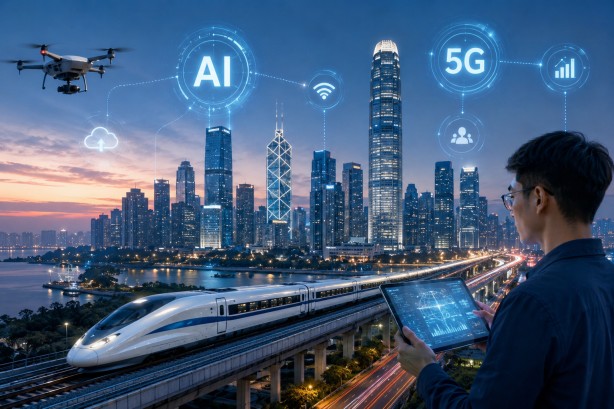
China is rapidly advancing its digital economy, marked by a significant increase in the adoption of artificial intelligence, enhanced digital infrastructure, and smart technologies across various sectors, including public services. By 2025, the digital economy in China had surged to a valuation of 49 trillion yuan ($7.22 trillion), accounting for approximately 35% of the nation’s GDP. Furthermore, core digital industries made up more than 10.5% of the GDP, underscoring the sector’s pivotal role in the country’s economic landscape.
Looking ahead, China has set ambitious goals under its 15th Five-Year Plan, spanning from 2026 to 2030. The plan outlines a comprehensive strategy to broaden the scope of AI applications, bolster data security measures, and enhance digital governance frameworks. Additionally, the plan emphasizes fostering international cooperation to further integrate global digital advancements with China’s domestic growth.
Major Chinese cities, particularly Beijing, are at the forefront of this digital transformation. These urban centers are pioneering initiatives such as internet hospitals, AI-driven traffic management systems, shared medical imaging platforms, and smart utility networks. These innovations are not only contributing to economic growth but are also significantly improving everyday services for the public, demonstrating the tangible benefits of integrating digital technologies into daily life.
Through these strategic efforts, China is not only reinforcing its position as a global leader in the digital economy but is also setting a benchmark for how emerging technologies can be effectively leveraged to enhance both economic performance and public service delivery. This transformation underscores the country’s commitment to a future where digital prowess plays a central role in its development narrative.