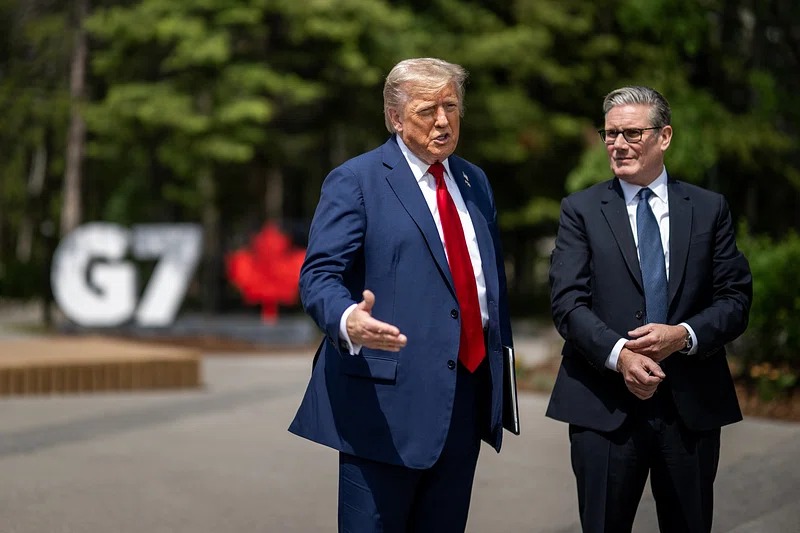
It was a weekend that began with diplomatic friction and ended with American bombers on British soil — and a public rebuke from the most powerful man in the world directed at one of America’s closest allies. The events at the Royal Air Force base in Fairford, Gloucestershire, illustrated how quickly military and diplomatic developments can intertwine.
Four US aircraft arrived at the base on Friday and Saturday, having secured permission from the British government after an initial refusal. The permission came with conditions — British officials were emphatic that access was granted for specific and limited defensive purposes only, a formulation designed to minimise the political fallout at home.
The operations that followed were linked to the broader US-Israeli campaign against Iran. British authorities justified their eventual cooperation by citing the risk of Iranian missiles being fired at the region, which they said posed a direct threat to British lives. The framing shifted the narrative from political alignment to self-interest.
Despite this, the American president made clear he was not satisfied. In a social media post that generated widespread coverage, he dismissed the UK’s belated support and noted that an offer of aircraft carrier deployment — which was being discussed — was no longer required. The war, he implied, was effectively over by the time Britain got involved.
The defence ministry’s announcement that HMS Prince of Wales was being readied for potential deployment was seen by many observers as a damage-limitation exercise — an attempt to demonstrate commitment to an ally who had already made his frustration very public.