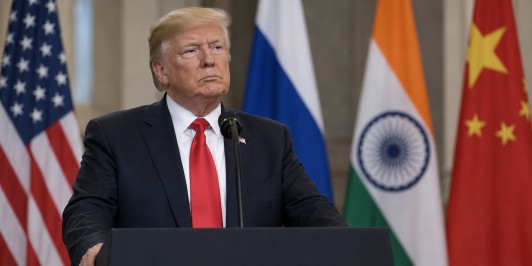
President Donald Trump has enacted new tariff powers under a recently signed Russia sanctions law, signaling a potential increase in tariffs on countries importing Russian energy. This move could impact major buyers such as India and China as the U.S. seeks to pressure Moscow to end the ongoing conflict in Ukraine.
The Lindsey O. Graham Sanctioning Russia and Iran Act of 2026, which Trump signed into law last week, grants the U.S. president the authority to impose tariffs of up to 100% on nations purchasing Russian oil and natural gas. Addressing the United Nations General Assembly, Trump highlighted these expanded tariff powers as a tool to encourage an end to the war between Russia and Ukraine.
In addition to potential tariffs, the legislation includes sanctions targeting Russian officials, financial institutions, and the energy sector, aiming to curb Moscow’s efforts to circumvent existing international restrictions. Trump’s announcement aligns with continued efforts by Washington to bring Russia to the negotiating table over its conflict with Ukraine.
Ukrainian President Volodymyr Zelenskyy has expressed his support for the new U.S. sanctions, indicating a readiness for further discussions aimed at resolving the conflict. The law provides discretionary power to the U.S. president, meaning that any tariff imposition on countries like India or China depends on future decisions by the U.S. administration.
While the legislation does not automatically enforce the maximum tariff, it marks a significant step in the U.S. strategy to apply economic pressure on Russia. This development underscores the broader geopolitical tensions involving energy trade and international sanctions.