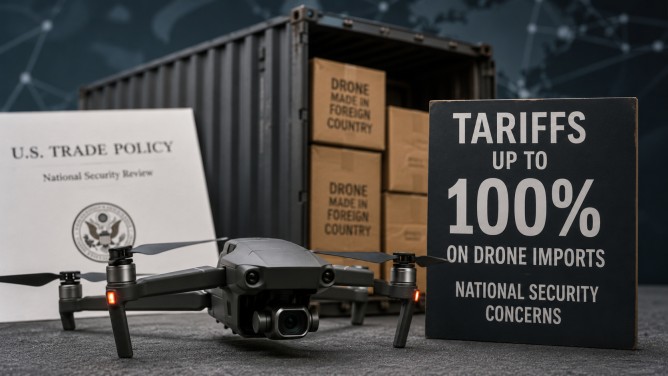
The United States has introduced significant tariffs on drone imports, aiming to address national security concerns and reduce reliance on foreign supply chains, particularly those dominated by China. The new tariffs, which are set to take effect on September 3, will impose up to a 100% duty on certain unmanned aircraft systems. The policy specifically targets larger drones weighing more than 25 kilograms and those equipped with national security-related features such as thermal cameras and docking stations. Smaller drones will face a 25% tariff.
In addition to targeting imports from China, the US will apply tariffs on drones and components from several major trading partners. Products originating from the European Union, Japan, Liechtenstein, South Korea, Switzerland, and Taiwan will be subjected to a 15% tariff, while imports from the United Kingdom will incur a 10% tariff, assuming the hardware, software, and technology involved are made within these countries or the US.
The White House has emphasized that these measures are designed to bolster the US defense and industrial base. The goal is to encourage domestic drone manufacturing, thus creating American jobs and reducing dependency on overseas suppliers. Currently, China holds a dominant position in the global drone industry, with DJI, based in Shenzhen, commanding a large portion of the US commercial drone market. DJI has previously faced US restrictions due to national security concerns.
US officials have raised alarms about the potential risks posed by foreign-made drones, including issues related to surveillance, sensitive data collection, and possible attacks. The US Federal Communications Commission has also suggested increasing domestic production to mitigate these risks. This move by the US is part of ongoing trade and technology tensions with China, which has responded with its own restrictions affecting drone exports to the US and actions against several American companies.