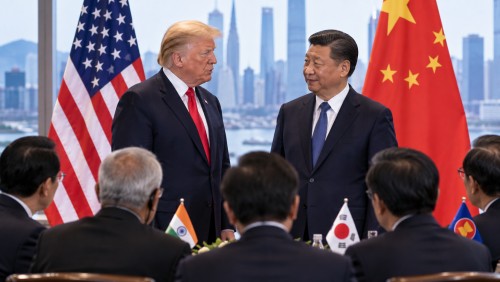
As the summit between U.S. President Donald Trump and Chinese President Xi Jinping approaches, Asian allies are on high alert, particularly regarding discussions that may impact Taiwan. The meeting, set to cover U.S.-China economic relations, holds significant implications for regional security, with Taiwan at the heart of potential shifts in American policy.
Taiwanese officials anticipate that President Xi will broach the subject of Taiwan during talks with President Trump. These discussions could influence Washington’s longstanding policy, which acknowledges China’s claim over Taiwan without endorsing it, while maintaining unofficial relations and defense cooperation with the island. Concerns have been communicated to U.S. officials, emphasizing the potential regional repercussions of any change in stance.
Japan is equally vigilant, urging the United States to adhere to established diplomatic language concerning Taiwan to avoid escalating tensions in the region. Japanese officials are actively seeking dialogue opportunities between Prime Minister Sanae Takaichi and President Trump ahead of the pivotal summit.
A key issue looming over the talks is U.S. arms sales to Taiwan, a point of contention for China, which views such deals as infringing on its territorial claims. President Trump has previously indicated that these arms packages could serve as negotiation leverage with Beijing, though they remain unapproved.
China’s firm opposition to U.S. arms transactions with Taiwan underscores the delicate balance Washington must maintain. As President Trump and President Xi prepare to meet, Taiwan’s strategic significance in regional stability and global semiconductor supply chains remains a crucial consideration for the United States and its Asian allies.