The carefully crafted strategic ambiguity that has characterized Japan’s position on Taiwan for over five decades is now becoming a source of diplomatic crisis as China demands explicit commitment to the “One China” principle. The 1972 joint statement that normalized relations between Japan and China featured language stating that Tokyo “fully understands and respects” Beijing’s position that Taiwan is an “inalienable part” of China, without explicitly endorsing this view—a formulation that provided useful diplomatic flexibility for decades.
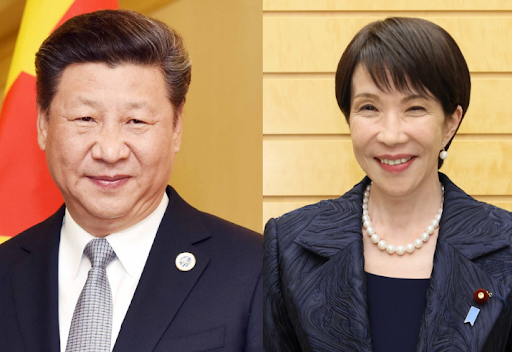
This ambiguity has become increasingly problematic as regional security dynamics evolve and Japan adopts more explicit positions on Taiwan’s security. Prime Minister Sanae Takaichi’s recent statements characterizing potential Chinese military action against Taiwan as a “survival-threatening situation” that could trigger Japanese military involvement represent a significant evolution in Japanese public diplomacy, one that Beijing views as incompatible with the spirit of historical agreements.
China’s response has been comprehensive, employing economic pressure across multiple dimensions. Travel advisories warning Chinese citizens about alleged safety concerns in Japan threaten to significantly reduce tourist arrivals that had reached over 8 million in the first ten months of this year, representing 23% of all international visitors to Japan. Economist Takahide Kiuchi projects potential losses of $11.5 billion and a 0.3 percentage point reduction in annual economic growth based on precedents from the 2012 island dispute.
Beyond tourism, the pressure campaign includes postponed cultural events, cancelled entertainment performances, and implicit threats regarding rare earth exports that are vital to Japanese manufacturing. The existing two-year ban on Japanese seafood exports to China shows no signs of being lifted, and there are concerns that additional trade restrictions could be implemented as part of what Professor Liu Jiangyong of Tsinghua University describes as gradually rolled-out countermeasures kept secret until implementation.
The diplomatic impasse reflects domestic political constraints in both countries that make de-escalation challenging. International relations expert Sheila A. Smith notes that leaders in both nations face pressure not to appear weak before their domestic audiences, creating a situation where neither can easily back down. While Takaichi has clarified that she was responding sincerely to hypothetical questions and maintains commitment to positive relations with President Xi Jinping, China’s foreign ministry continues to demand retraction of what it terms “erroneous remarks” and explicit reaffirmation of Japan’s commitment to the “One China” principle.